Hypothyroidism, hyperthyroidism, nodules and thyroid disease in pregnancy. A gland the size of a thumb sets the pace of your metabolism, your mood, your periods and your heart rate — which is why the symptoms are so easy to blame on something else.
Thyroid symptoms overlap with anaemia, depression, perimenopause and simple overwork. The history is what decides which tests are worth doing, and it is also what stops a borderline TSH being treated as a disease it is not.
TSH with free T4 for most people; free T3 where hyperthyroidism is suspected; TPO antibodies where the cause matters, which it does in pregnancy and in young women planning one.
The gland is examined by hand. A visible swelling, an asymmetry or a palpable nodule is what triggers an ultrasound — not every abnormal TSH.
Thyroxine takes six to eight weeks to show its full effect on TSH, so the dose is set and then confirmed. Chasing the number weekly is how people end up over-treated.
TSH, free T4, free T3 and TPO antibodies, done at the clinic.
Size, symmetry, nodules and lymph nodes — the part a blood test cannot do.
Targets in pregnancy are tighter than outside it, and the dose usually has to rise. Managed trimester by trimester.
Thyroid disease and weight are linked, but far less than the internet claims. Both get looked at honestly.
An overactive thyroid can drive atrial fibrillation. ECG on site where the pulse or symptoms warrant it.
Requirements change with age, weight, pregnancy and other medication. Reviewed rather than repeated.
An underactive and an overactive thyroid produce almost opposite symptoms. Tick what you have noticed over the last few months.
Symptoms cannot tell you which way a thyroid is pointing, and plenty of people tick items from both columns. Only a blood test settles it. If you are pregnant or planning to be, do not wait on symptoms at all — have the TSH done.
Often not. A mildly raised TSH with a normal free T4 is called subclinical hypothyroidism, and it sometimes resolves on its own — a repeat test six to eight weeks later is usually wiser than starting a lifelong tablet on one reading. Treatment is more clearly indicated if the TSH is well above range, if TPO antibodies are positive, or if you are pregnant or trying to conceive.
For most people with hypothyroidism, yes, because the gland does not recover. There are exceptions: thyroiditis after a viral illness or after pregnancy is often temporary, and treatment can be withdrawn under supervision to see whether the gland has picked up again. Hyperthyroidism is a different question with several treatment routes.
Some, if you were genuinely hypothyroid — mostly fluid rather than fat, and typically a few kilograms. It is not a weight-loss treatment, and thyroxine given to someone with a normal thyroid does not cause weight loss; it causes palpitations, anxiety and bone loss. If weight is the main concern, that is worth addressing on its own terms.
On an empty stomach, with water, and then nothing for 30 to 60 minutes. Calcium, iron, antacids and soy all interfere with absorption, so those need a gap of about four hours. Taking it inconsistently is one of the commonest reasons a dose looks like it is not working.
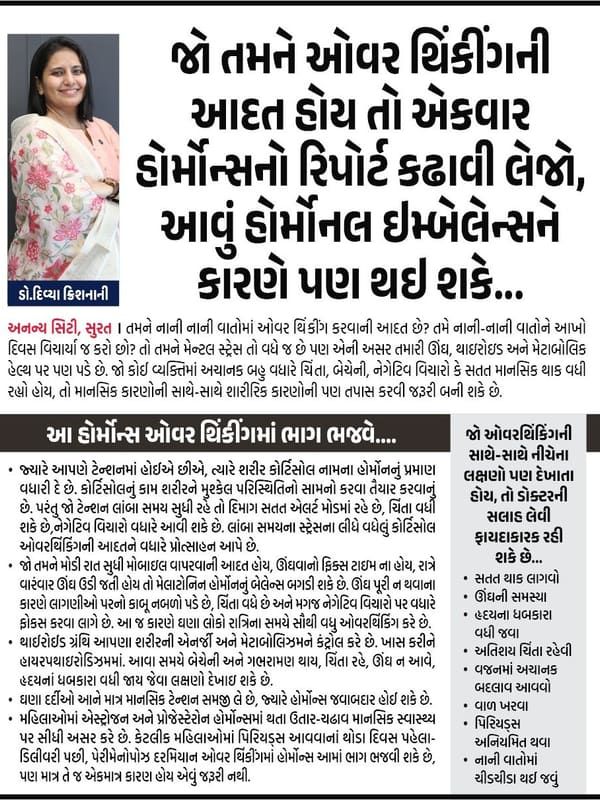
Yes, and it is under-recognised. Both an overactive and an underactive thyroid affect mood, sleep and concentration, and people are frequently treated for anxiety for months before anyone checks a TSH. Dr. Divya has written a column on precisely this.
It can affect ovulation, the chance of miscarriage and the baby's early neurological development. Thyroid requirements rise in pregnancy, often by a quarter to a half, so anyone on thyroxine should have their TSH checked as soon as pregnancy is confirmed rather than at the next routine visit.
Published features from her standing column in the Surat Gujarati press.
Further reading: Exercise for Thyroid Health
No online booking to wrestle with — the clinic answers the phone 9 AM - 9 PM, and WhatsApp is read the same day.
Not an emergency service. For a medical emergency, go to the nearest hospital.
Conditions treated
Care and diagnostics