Polycystic ovary syndrome is a metabolic condition that shows up as a gynaecological one. Irregular periods and acne are what bring people in; insulin resistance is usually what is underneath, and treating that is what changes the rest.
The diagnosis needs two of three features and the exclusion of the conditions that mimic it — thyroid disease, raised prolactin and late-onset adrenal hyperplasia among them. A scan showing follicles is on its own not a diagnosis, and a great many people have been told it is.
Fasting glucose and insulin, HbA1c, lipids and liver enzymes. Insulin resistance is the engine of PCOS in most people, and it is also the part that carries the long-term risk.
The priority differs completely depending on whether you want cycles regularised, acne and hair controlled, or a pregnancy. The same diagnosis leads to different plans, and the plan follows what you actually want.
PCOS raises the risk of type 2 diabetes and of endometrial problems from prolonged unopposed oestrogen. Both are manageable, and both need someone tracking them across years rather than visits.
Androgens, LH/FSH, prolactin, thyroid, fasting insulin and glucose — enough to confirm the diagnosis and exclude the mimics.
The part most often skipped, and the part that explains the weight, the cravings and the long-term diabetes risk.
Restoring predictable periods, which matters for symptoms now and for endometrial protection later.
Modest weight loss — often 5 to 10% — restores ovulation in a substantial share of people. Built around Gujarati food, not around a Western meal plan.
Ovulation induction where appropriate, and a clear handover to a gynaecologist when that is the right next step.
Annual glucose and lipid review, because PCOS is a lifelong metabolic risk factor rather than a phase.
PCOS needs two of three features to be present, and other conditions that look like it to be ruled out first. Tick what applies to see where you sit.
This is the diagnostic framework, not a diagnosis. It cannot exclude the conditions that mimic PCOS — that needs blood tests. Bring this and your scan report to a consultation.
In everyday Indian usage the two are used interchangeably, but they are not quite the same thing. Polycystic ovarian morphology — the appearance on a scan — is common and can occur in women with entirely normal cycles and hormones. PCOS is the syndrome: the scan appearance plus irregular ovulation and/or raised androgens, with other causes excluded. Having the scan finding alone does not mean you have the syndrome.
No. PCOS is one of the most common causes of difficulty conceiving, and it is also one of the most treatable. Many people conceive with weight management alone, many more with ovulation induction. It affects how easily you conceive, not whether you can.
Insulin resistance. Your body produces more insulin to do the same job, and insulin is a storage hormone — it promotes fat deposition, particularly around the abdomen, and it drives hunger. This is why PCOS weight gain is so resistant to ordinary calorie restriction, and why treating the insulin resistance changes what the same diet achieves.
The combined pill is one option among several and it is a symptom control, not a cure — it regularises bleeding and helps acne and hair while you take it. Whether it is right depends on what you want treated and whether you are trying to conceive. Metformin, anti-androgens and lifestyle change all have places, and often the answer changes over the years.
It can be controlled to the point where you have no symptoms and no ongoing metabolic risk, which is what most people mean when they say cured. The underlying tendency does not go away, and symptoms can return if weight and insulin resistance drift back. That is a reason for long-term follow-up, not a reason for pessimism.
Both have a role and it depends on the problem. If the priority is conception, a gynaecologist leads. If it is the metabolic side — insulin resistance, weight, diabetes risk, lipids, long-term prevention — that is endocrine ground. In practice PCOS is managed best when the two talk to each other.
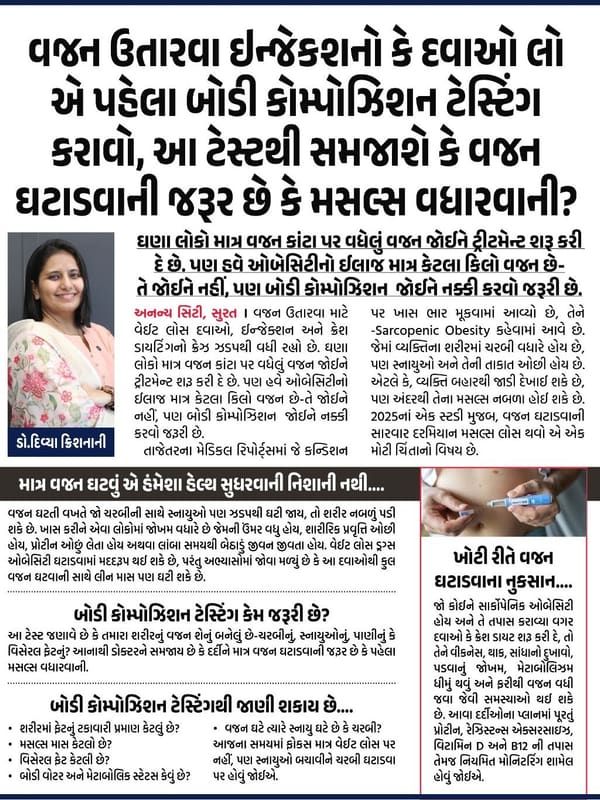
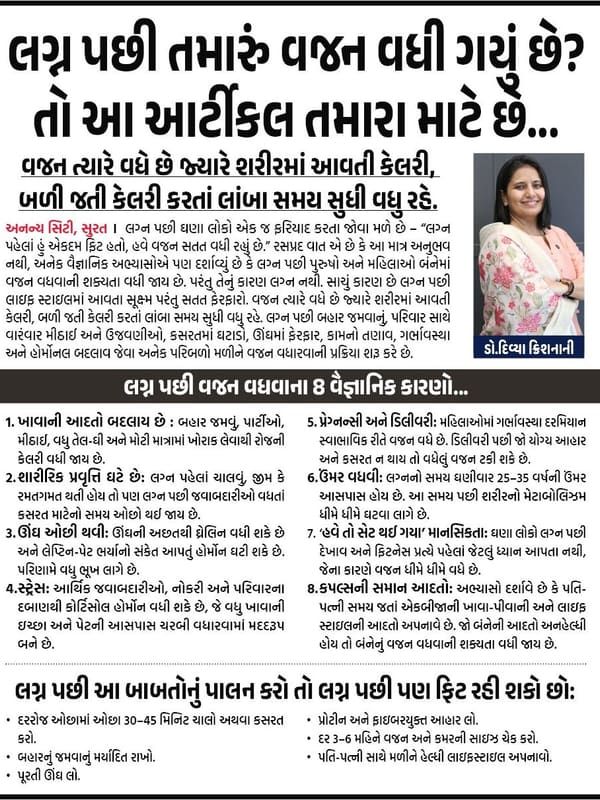
Published features from her standing column in the Surat Gujarati press.
Further reading: PCOS Management
No online booking to wrestle with — the clinic answers the phone 9 AM - 9 PM, and WhatsApp is read the same day.
Not an emergency service. For a medical emergency, go to the nearest hospital.
Conditions treated
Care and diagnostics