Type 1, type 2 and gestational diabetes — diagnosed properly, then managed by the numbers rather than by guesswork. The bloods, the heart check, the eye check and the foot check all happen at the clinic, usually in the same visit.
What you eat, when you eat, what you do all day, what you are already taking and what has been tried before. Most treatment failures turn out to be a routine problem rather than a drug problem, and that only surfaces if somebody asks.
HbA1c, fasting and post-meal glucose, lipids, kidney and liver function, and thyroid where it is relevant. Done at the clinic, so the results are read by the doctor treating you rather than posted back a week later.
Diabetes damages eyes, kidneys, nerves, feet and arteries silently, for years, before anything hurts. The ECG and the foot check are done here; the retinal screening is booked with an eye specialist and the report read back against your diabetes. Either way it is arranged rather than left to you.
Medication set against your numbers, a diet built around what you already eat, and a date to check whether it worked. Diabetes is managed over years, so the follow-up interval is part of the plan.
The three-month average and the day-to-day picture. One without the other misses the swings.
ECG, 2D Echo and TMT on site. Heart disease is the leading cause of death in diabetes, so it is screened rather than assumed.
Diabetic retinopathy is painless until it takes your sight. The examination is an eye specialist's; the timing and the report are part of your diabetes review.
Sensation, circulation, skin and nails. The check that prevents the ulcer, which is the thing that prevents the amputation.
Doses matched to your meals and your routine, not to a textbook day.
Urine albumin, creatinine and a lipid profile, tracked over time rather than read once.
HbA1c is a percentage, which is why almost nobody has an intuition for it. This converts it into an average blood glucose in the units your glucometer uses.
HbA1c reflects roughly the last eight to twelve weeks and can be misleading in anaemia, pregnancy, kidney disease and some haemoglobin variants. Your personal target may sensibly be higher or lower than the general one — that is a conversation, not a calculation.
For most adults with type 2 diabetes the general target is below 7%, but it is genuinely individual. A younger person with no complications may be pushed tighter; an older person on insulin who has had a hypoglycaemic episode may be safer a little higher, because the risk of a severe low outweighs the benefit of a lower average. The target is set at the consultation, not from a chart.
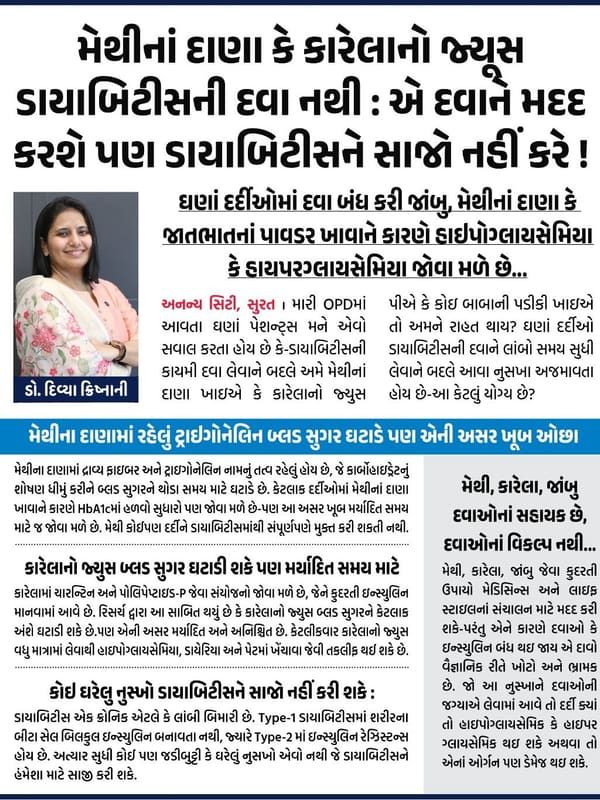
Type 2 diabetes can go into remission — normal blood glucose off medication — most often in people diagnosed within the last few years who achieve substantial weight loss. That is remission, not cure: the tendency remains and it can return. Type 1 diabetes cannot be reversed, because the insulin-producing cells are gone. Anyone promising a permanent cure for either is not describing medicine.
Not necessarily, and not as a punishment. Insulin is needed when the pancreas can no longer keep up, which happens to some people and not others. It is also used temporarily — around surgery, during an infection, in pregnancy — and then stopped. Delaying insulin when it is genuinely needed does more harm than starting it.
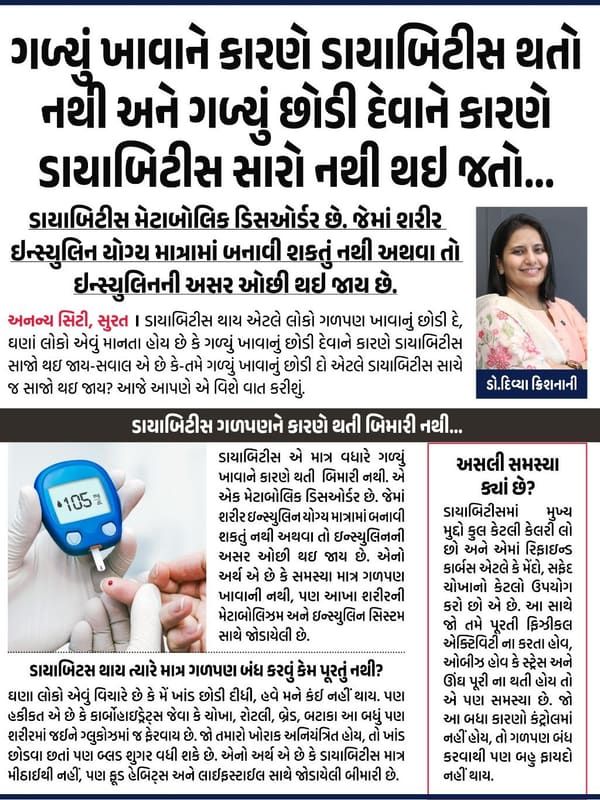
No. What raises sugar is the quantity, the company it keeps and how fast you eat it. Rice alone spikes glucose; rice with dal, vegetables, salad and protein does so far more slowly. Dr. Divya has written about exactly this in her newspaper column, and it is the single most common thing patients arrive having got wrong.
Typically every three months while things are being adjusted, because that is the timescale HbA1c moves on. Once you are stable, six-monthly with an annual complication screen is usually enough. If something changes in between, come sooner.
It helps for the first visit, since a fasting glucose and lipid profile are usually part of the initial workup. HbA1c does not require fasting. If you have already eaten, come anyway — the bloods can be done on another day rather than losing the consultation.
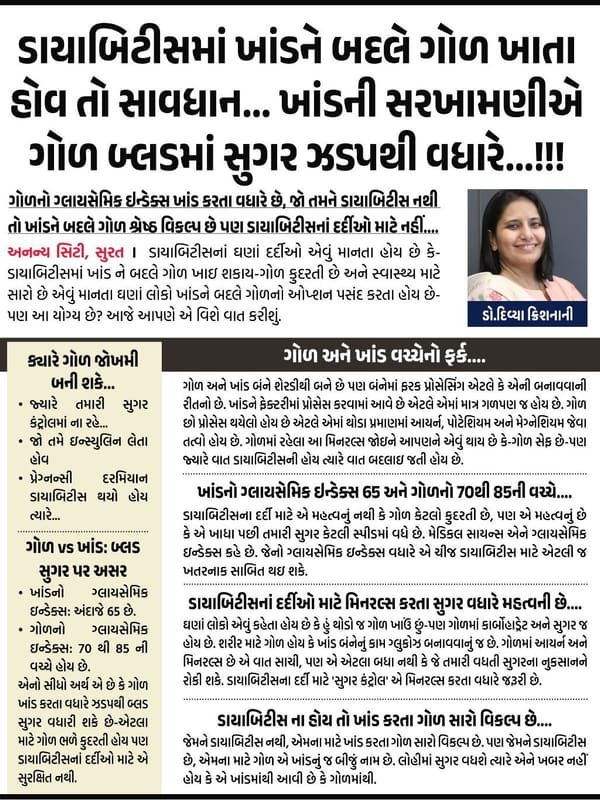
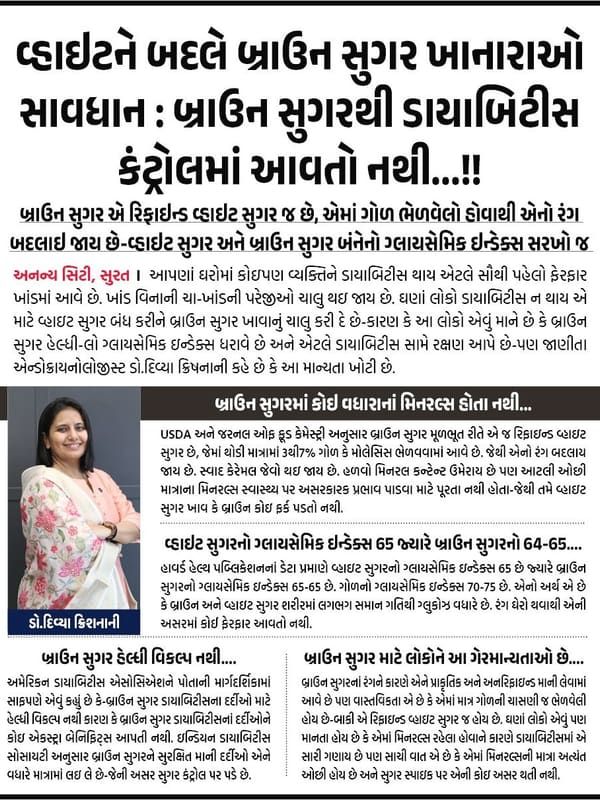
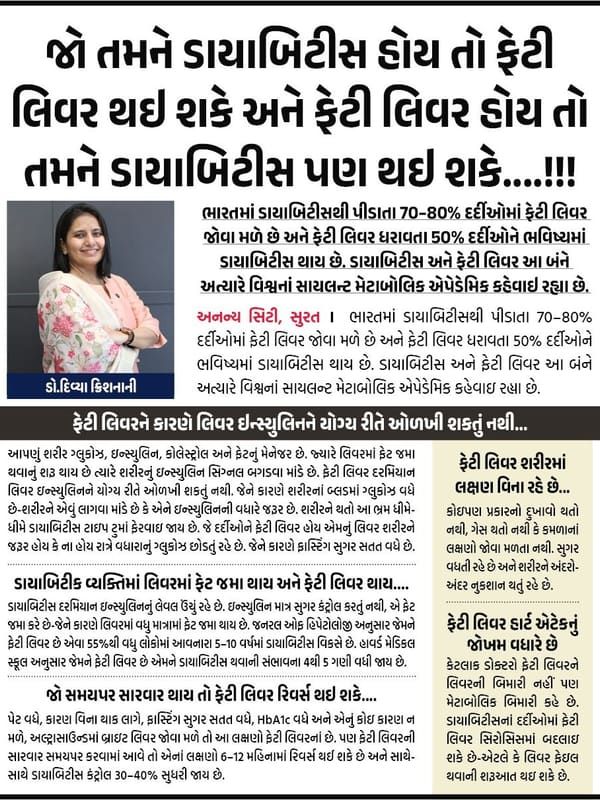
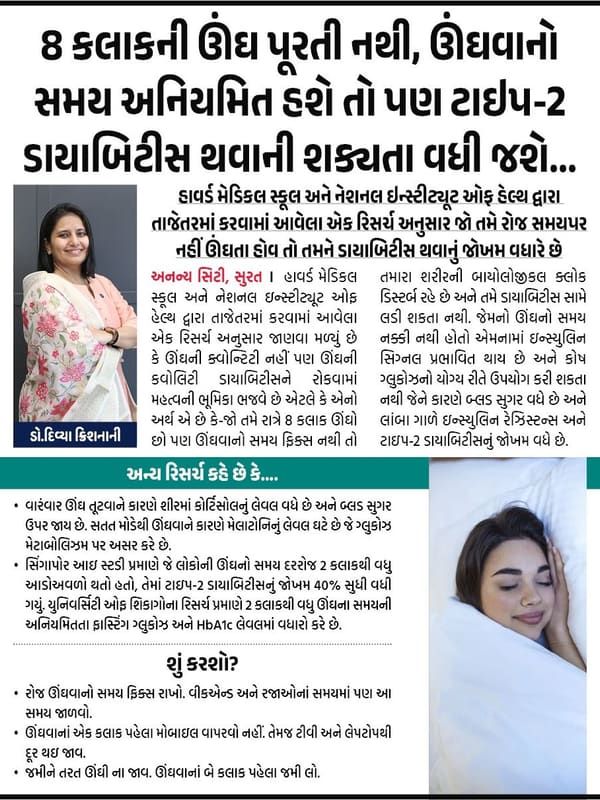
Published features from her standing column in the Surat Gujarati press.
Further reading: Diabetes-Friendly Diet
No online booking to wrestle with — the clinic answers the phone 9 AM - 9 PM, and WhatsApp is read the same day.
Not an emergency service. For a medical emergency, go to the nearest hospital.
Conditions treated
Care and diagnostics