
A plan built from what your household already cooks. Most diet advice for diabetes in India fails for one reason: it asks people to eat food nobody in the house makes, and within a month they are back on the old thali with nothing changed.
Not what you think you should be eating. A real account of the week, including the tea, the biscuits, the late dinners and the weekend. Nothing useful can be built on an idealised version.
It is rarely the whole diet. It is usually two or three habits — the size of the rice portion, the empty roti-and-pickle lunch, the fruit juice, the after-dinner sweet — that account for most of the glucose excursion.
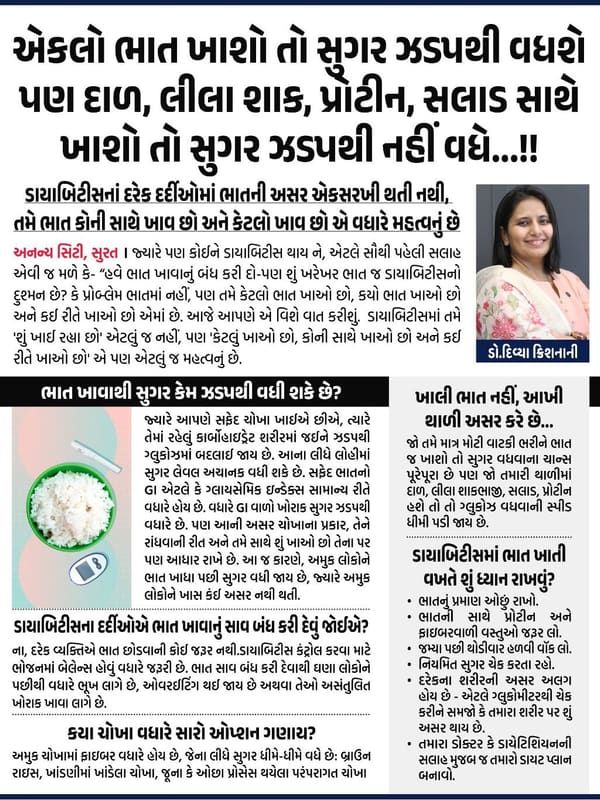
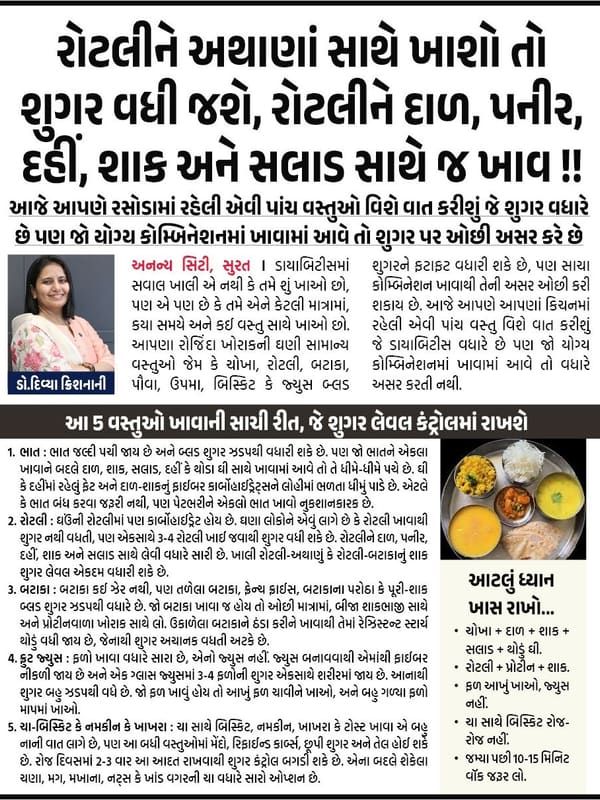
Same foods, different proportions, different order, different partners on the plate. Rice with dal, sabzi, curd and salad behaves like a different food from rice on its own.
Post-meal readings against specific meals. This turns diet from an article of faith into something you can check, and it is how you learn which foods your body in particular reacts to.
Thali structure, portion sizes and combinations — using the food already being cooked at home.
How much of a food, not only which food. A low-GI item in a large enough portion still spikes.
When you eat, and what you eat first. Vegetables and protein before the carbohydrate flattens the same meal's glucose curve.
Navratri, Diwali, weddings and restaurant meals planned for rather than treated as failures.
Enough protein to keep muscle while losing fat — the part most Indian weight-loss diets are short on.
A plan that is revisited, because tastes, seasons and schedules change.
The proportions matter more than the individual items. Pick a section of the plate.
Sabzi, salad, raita vegetables, greens. This is the half that does most of the work, and it is the half most Gujarati thalis are shortest on. Fibre slows the whole meal down, so what you put here changes how the rice and roti on the rest of the plate behave. Potato, sweet potato and yam do not count here — they belong with the carbohydrates.
Rice, roti, bajra, jowar, poha, khichdi. Not banned, not unlimited — a quarter of the plate. This is where portion control does more than substitution: brown rice in a large bowl still raises glucose more than white rice in a small one. Millets are a genuinely useful swap because of their fibre, but they are still carbohydrate.
Dal, chana, rajma, paneer, curd, eggs, fish or chicken. Protein blunts the glucose rise from the rest of the meal, keeps you full for longer, and — during weight loss — is what decides whether you lose fat or muscle. It is the most commonly under-eaten part of a vegetarian Indian plate, and the easiest to fix.
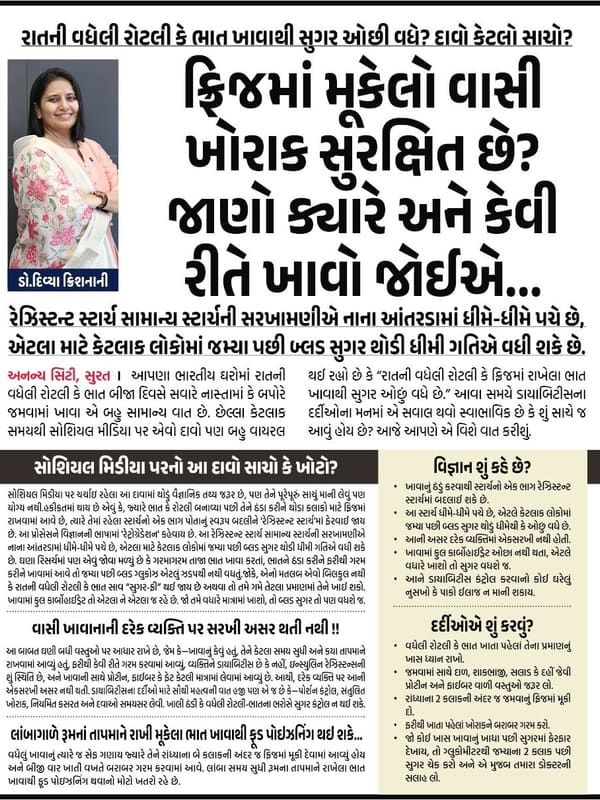
The same meal, eaten in a different order, produces a different glucose curve. Starting with the salad and the dal and finishing with the rice flattens the peak, because the fibre and protein are already slowing gastric emptying by the time the carbohydrate arrives. It costs nothing, requires no change to what is cooked, and it is the single easiest thing on this page to adopt.
Proportions are a starting structure, not a prescription. Your quantities depend on your weight, your medication, your activity and your readings — which is what the consultation is for.
No, and being told to is the reason many people give up on diet advice entirely. Rice eaten alone, in a large portion, raises glucose fast. The same rice in a smaller portion alongside dal, vegetables, curd and salad raises it far more slowly. The problem is almost never the rice by itself.
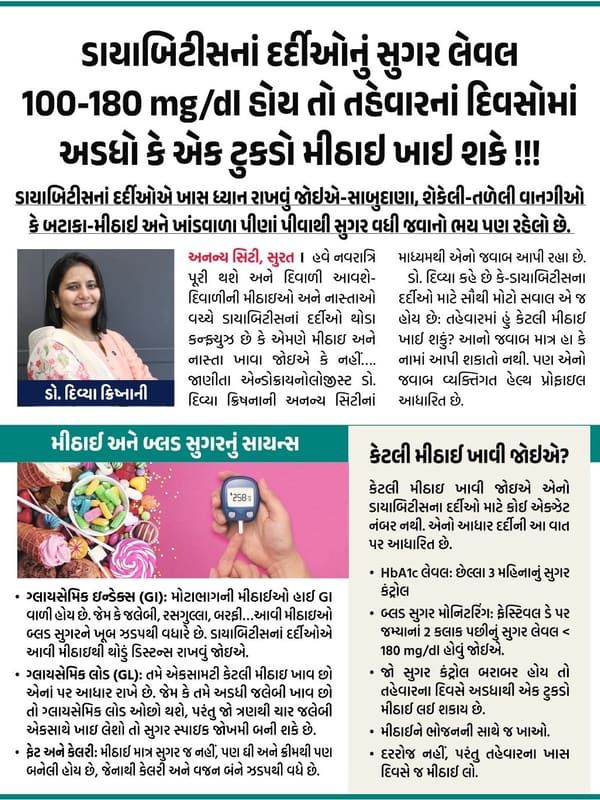
No. Jaggery is less processed and contains trace minerals, which is where the belief comes from, but its glycaemic index is actually higher than white sugar's — roughly 70 to 85 against about 65. For someone with diabetes it behaves like sugar under another name. Dr. Divya has written a full column on this.
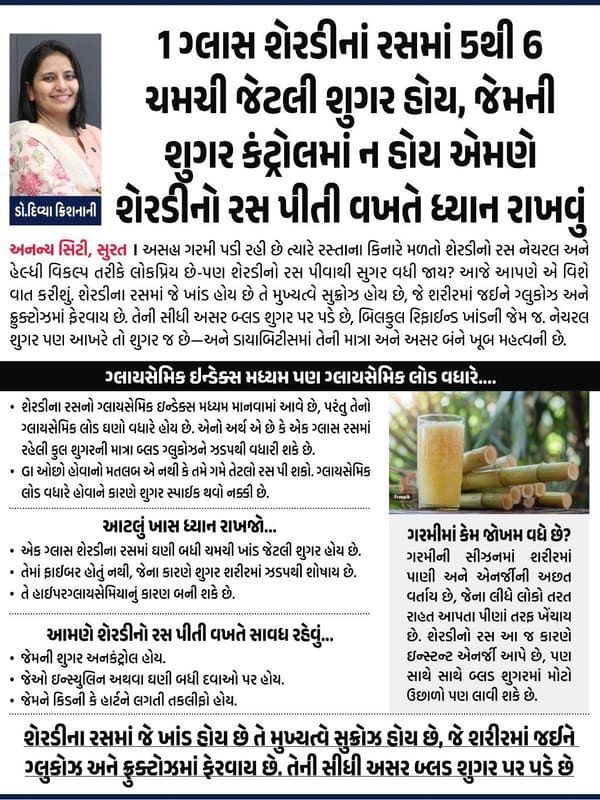
Yes — whole fruit, in sensible portions. Juice is the problem: it removes the fibre that slows absorption and concentrates three or four fruits into one glass. Eat the fruit, do not drink it, and keep the very sweet ones to a measured quantity.
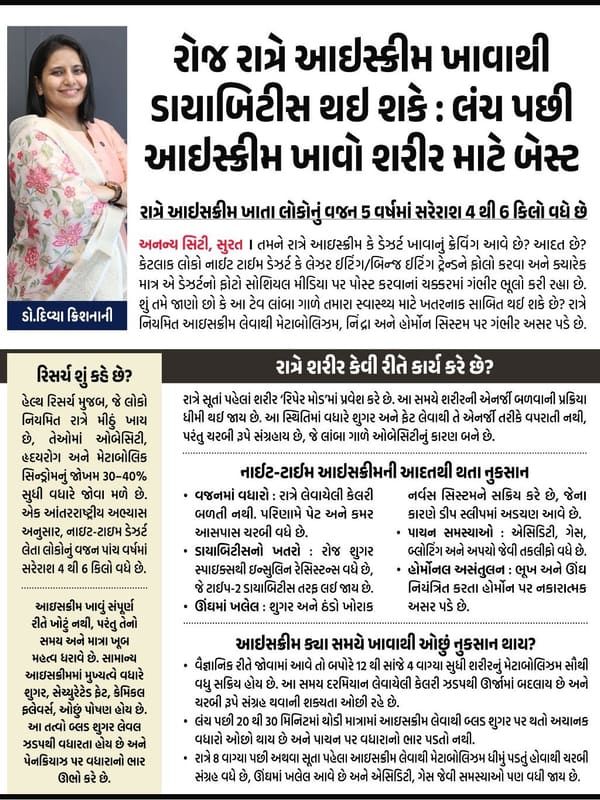
It depends entirely on your medication. Someone on insulin or a sulphonylurea who fasts for long stretches risks hypoglycaemia, so regular intake matters. Someone on metformin alone usually does not need to graze, and constant snacking keeps insulin levels permanently raised. The advice differs by person, which is why blanket rules from the internet cause so much trouble.
They are a useful swap, not a cure. Bajra, jowar and ragi carry more fibre and protein than refined wheat or white rice and raise glucose more slowly, so they earn a place. They are still carbohydrate, and eaten in unlimited quantity they will still raise your sugar.
You will get a plan, which is not the same thing. A generic chart is what you have already tried. The useful output is a handful of specific changes to the meals you actually eat, in the quantities you actually eat them, that you can keep up for years.
Published features from her standing column in the Surat Gujarati press.
Further reading: Diabetes-Friendly Diet
No online booking to wrestle with — the clinic answers the phone 9 AM - 9 PM, and WhatsApp is read the same day.
Not an emergency service. For a medical emergency, go to the nearest hospital.
Conditions treated
Care and diagnostics