Nerve damage takes away the pain that would have told you something was wrong. That is the whole problem: by the time a diabetic foot hurts, it is often already an ulcer. Checked regularly, almost all of it is preventable.
A 10 gram monofilament pressed at set points on the sole. If you cannot feel it, you have lost protective sensation — which means an injury will not announce itself, and the whole prevention strategy changes.
Foot pulses, skin temperature, colour and hair growth. Blood supply decides whether a wound will heal at all, so it is established before anything is dressed.
Callus, fissures, fungal infection, ingrown nails and the places your footwear is rubbing. Callus is not cosmetic — it concentrates pressure and is where ulcers form underneath.
Debridement, dressing and infection control where needed, then the daily routine and footwear advice that stops the next one. Blood glucose is addressed at the same time, because no wound heals well at an HbA1c of 11.
Objective measurement of nerve function, repeated over time so change is visible.
Pulses and perfusion, with onward referral if revascularisation is needed.
Debridement, dressing, offloading advice and infection management.
Safely, by someone who can see the foot properly — which is the argument against doing it at home with a blade.
What to wear, what to stop wearing, and how to check a shoe before your foot goes in it.
How often you need checking depends on what today's examination finds, not on a fixed calendar.
This is the check to do every day, and it is worth doing now. Tick anything you can see or feel on either foot.
A daily check takes less than a minute. Use a mirror for the soles, or ask someone — the places you cannot see are where problems start.
Every day, and it takes under a minute. If sensation is reduced you cannot rely on pain to tell you something has happened, so looking becomes the substitute for feeling. Use a mirror or ask someone for the soles and between the toes — the places you cannot see are exactly where the problems start.
With care, and not from anyone using blades on callus. The risks are unsterile instruments, unnoticed cuts and enthusiastic removal of hard skin that leaves raw tissue behind. Tell the salon you have diabetes. If sensation is already reduced, nail and callus work is genuinely safer done clinically.
That is typical of diabetic peripheral neuropathy, and it is often worse at night because there is less to distract from it. It signals nerve damage, which means the protective-sensation question needs answering even though burning is the opposite of numbness. There are treatments that help the pain, and improving glucose control slows the underlying process.
Hot water is one of the commonest causes of a serious diabetic foot burn, precisely because reduced sensation means you cannot judge the temperature. Use lukewarm water, test it with your elbow or a thermometer, keep it brief and dry thoroughly between the toes afterwards.
Almost never, if it is seen early. The sequence that ends badly is a small unnoticed wound, in a foot with poor sensation and poor circulation, that becomes infected before anybody looks at it. Every step of that is interruptible, and looking early is the cheapest interruption there is.
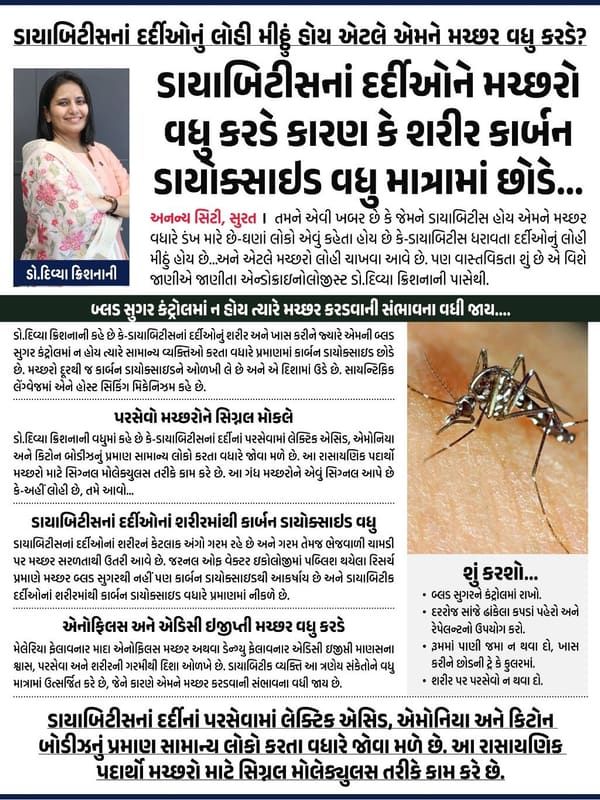
Published features from her standing column in the Surat Gujarati press.
No online booking to wrestle with — the clinic answers the phone 9 AM - 9 PM, and WhatsApp is read the same day.
Not an emergency service. For a medical emergency, go to the nearest hospital.
Conditions treated
Care and diagnostics