Heart disease is the commonest cause of death in people with diabetes, and it frequently arrives without the classic chest pain — nerve damage blunts the warning. ECG, 2D Echo and TMT are done at the clinic, so screening is part of the review rather than another appointment somewhere else.
Symptoms, blood pressure, lipids, smoking, family history and how long you have had diabetes. That determines which test is worth doing — the point is not to run all three on everybody.
Five minutes, no preparation. It records the heart's electrical activity and shows rhythm disturbances, evidence of a past silent heart attack, and strain on the heart muscle.
An ultrasound of the heart: chamber sizes, valve function and how well the muscle is actually pumping. This is the test that gives an ejection fraction.
A treadmill test, monitored throughout. A heart can look entirely normal at rest and reveal a problem only when it is asked to work — which is the point of testing under exercise.
Rhythm, conduction, and the electrical signature of previous damage.
Structure and pump function, including valves and ejection fraction.
How the heart behaves under graded exertion, with continuous monitoring.
The two modifiable risks that do most of the damage, tracked alongside glucose.
Interpreted by the doctor who is also managing your diabetes, rather than as an isolated report.
A clear handover with the results, when what is found needs a cardiologist.
Three heart tests with similar-sounding names that answer completely different questions. A normal result on one does not make the others unnecessary.
Electrodes on the chest and limbs record the heart's electrical activity. It shows the rhythm, whether conduction is delayed, whether the muscle is under strain, and — importantly in diabetes — the electrical scar of a heart attack you may not have known you had. It is quick, cheap and completely painless, and it is normal in plenty of people who do have coronary disease, which is its limitation.
An ultrasound of the heart. It shows the chambers, the valves, the thickness of the muscle and — the number people are usually after — the ejection fraction, meaning how much blood the left ventricle pushes out with each beat. This is the test for breathlessness, for suspected heart failure, and for a murmur. It is looking at the pump, not at the plumbing.
You walk on a treadmill that gets progressively harder while the ECG, blood pressure and symptoms are monitored throughout. A partially narrowed artery can supply the heart perfectly well at rest and fall short only when demand rises — so this catches what a resting test cannot. It is stopped at the first sign of a problem, and it is not suitable for everybody, which is why it follows a risk assessment rather than being ordered blind.
Which of these you need depends on your symptoms and your risk, not on wanting the full set. That decision is made at the consultation.
Because in diabetes, the absence of chest pain is not reassuring. The same nerve damage that numbs the feet can blunt the warning signals from the heart, which is why silent heart attacks are markedly more common in people with diabetes. Breathlessness, unusual fatigue or a drop in exercise tolerance can be the only symptoms.
An ECG records electrical activity — rhythm and evidence of past damage. An Echo is an ultrasound that shows physical structure and how well the heart pumps. A TMT watches the heart under exercise, which reveals problems that only appear when demand rises. They answer different questions, which is why one normal result does not make the others unnecessary.
It is performed under continuous monitoring and supervision, and it is stopped at the first sign of a problem — that is its design. It is not appropriate for everyone: unstable symptoms, certain rhythm problems and some joint or mobility limitations rule it out, which is why the risk assessment comes before the test rather than after.
For an ECG or Echo, nothing. For a TMT, wear comfortable shoes and clothes you can walk in, avoid a heavy meal for a few hours beforehand, and ask before the test whether to take your usual heart or blood pressure medication that morning — some of them alter the result.
For most people with diabetes and no symptoms, a periodic review rather than an annual battery of tests. The interval depends on how long you have had diabetes, your control, your blood pressure and lipids, and what previous tests showed. Any new symptom resets the clock.
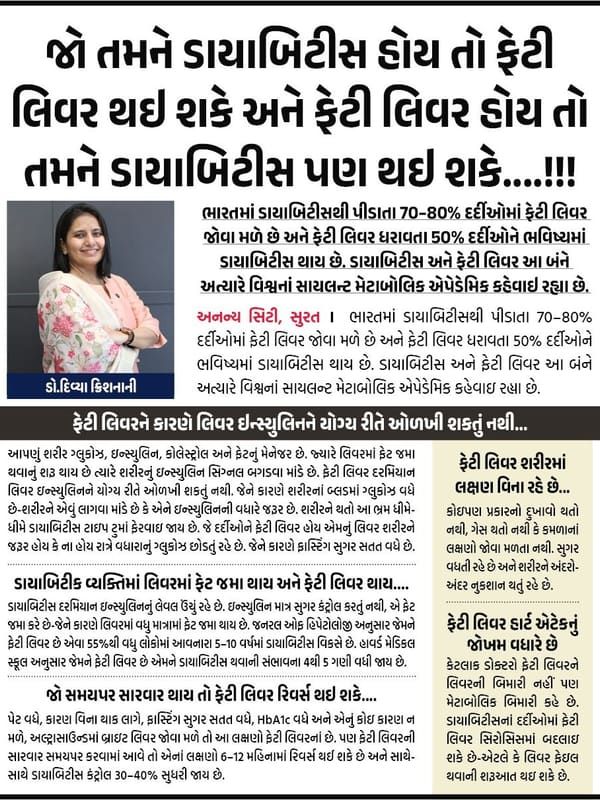
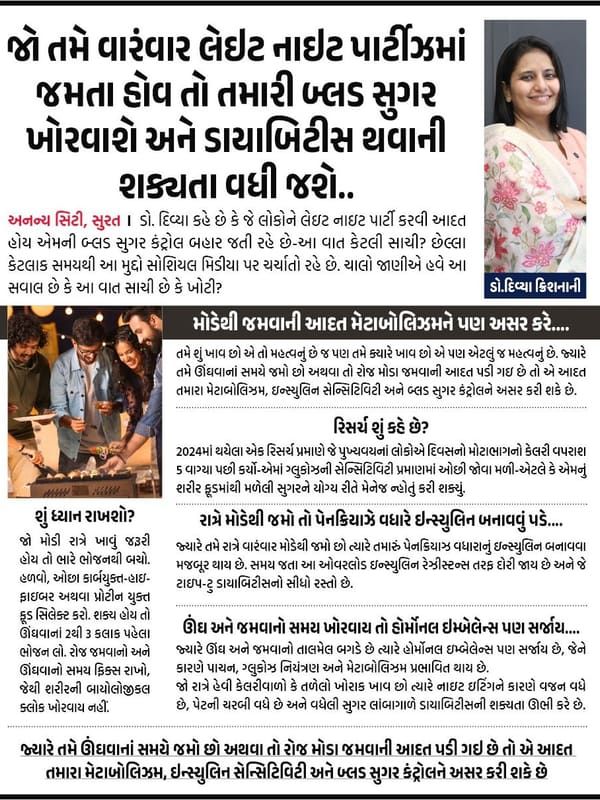
Published features from her standing column in the Surat Gujarati press.
No online booking to wrestle with — the clinic answers the phone 9 AM - 9 PM, and WhatsApp is read the same day.
Not an emergency service. For a medical emergency, go to the nearest hospital.
Conditions treated
Care and diagnostics